


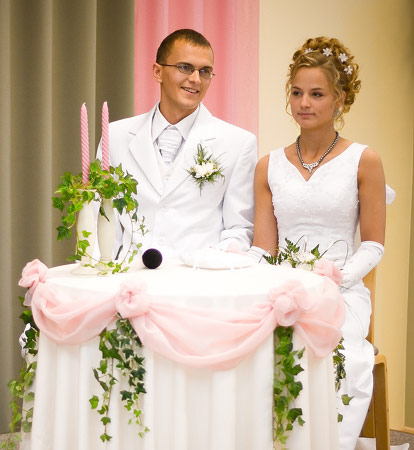

In Estonia, marriage is grounded in a legal architecture that emphasizes personal autonomy, administrative precision, and statutory equality. Cultural and ceremonial expressions around marriage reflect regional heritage, individual choice, and evolving social norms rather than fixed national emphases. The following sections outline how marriage is formed, legally recognized, culturally affirmed, and experienced across Estonia. The presentation distinguishes statutory law, religious or customary rituals, social conventions, and demographic realities, carefully noting regional, ethnic, socioeconomic, and historical dimensions.
Spouse Selection and Family Role
Estonians choose their spouses based on individual preference; the Family Law Act does not require parental or family approval, except in the rare case of restricted legal capacity. While informal family input exists, especially in close-knit communities, such influence remains occasional and is not institutionalized.
Promise of Marriage
A formal engagement or lubadus abiellumiseks (promise of marriage) carries no legal authority in Estonia. These commitments are symbolic and socially personal but legally void—even if framed as contracts.
Civil vs Religious Validity
Only marriages officiated by a registrar or notary—who adhere to legal statutes—are recognized by Estonian law. Religious ceremonies alone lack legal effect unless performed by clergy authorized and trained under civil regulations. The Family Law Act prohibits marriages involving minors, incapacitated persons, close relatives, or individuals already in a registered partnership or marriage.
Property, Surnames, and Residence
Couples selecting a property regime at marriage may opt for default joint ownership, accrual (offset of asset growth), or separate property. Absent a choice, joint property applies. Spouses may adopt or hyphenate a partner’s surname (up to two parts), although children may not bear hyphenated surnames. Residence is individually registered—there’s no legal obligation for cohabitation, though it is culturally expected.
Same‑Sex Marriage, Registered Partnerships, and Polygamy
Estonia introduced registered partnerships on January 1, 2016, open to same‑sex and opposite‑sex couples. From 1 January 2024, marriage has been defined neutrally in law, allowing same‑sex couples to marry. Registered partnerships remain available and may be converted to marriage without dissolution. Polygamy and polygyny are expressly forbidden—only monogamous unions are legally valid.
Cohabitation and Alternative Partnerships
Informal cohabitation is widespread but limited in legal standing. Registered partnerships provide tangible legal recognition—covering inheritance, maintenance, and decision-making rights—unavailable to purely informal unions, though many couples still opt for cohabitation without legal formalities.
Divorce, Remarriage, and Demographic Trends
Divorce may proceed by mutual application through a registrar or notary or through court if contested. In 2025, there were 5,998 marriages and 3,062 divorces. Of marriages, 139 were same‑sex unions. The average age at first marriage in 2025 was about 32 for men and 30 for women. Remarriages accounted for approximately 22 percent of marriages for men and 23 percent for women. The divorce rate in Estonia was around 2.1 per 1,000 persons in 2024, among the highest in the European Union.
E‑Governance and Digital Marriage Services
Estonia's e‑government allows online marriage applications, status tracking, and administrative interaction. Since December 2022, digital submission is possible when both applicants are registered residents. While this digital infrastructure streamlines legal processes, ceremonial traditions operate independently of e‑services.
Cultural Ceremonies and Celebrations
Ceremonial expressions are diverse and localized. In some rural or island communities, couples may wear rahvarõivad (folk costumes), include folk songs regilaul or regional rituals. However, such elements are optional and localized, not nationally codified. Western-style traditions—white dresses, engagement rings, bridesmaids, wedding cakes—are not dominant nor uniformly expected.
Contemporary Developments and Social Norms
Estonia’s marriage laws have modernized significantly: registered partnerships began in 2016 and gender-neutral marriage in 2024. Public support for same‑sex marriage has increased, particularly among younger, urban, and Estonian-speaking populations, with more conservative views prevalent in some ethnic minority and rural groups.
Estonia’s marriage framework is shaped by precise legal regulation—defining capacity, consent, property options, surname rules, dissolution paths, and equality, including same‑sex marriage. This clarity coexists with a ceremonial landscape shaped by individual preference, local culture, and evolving customs rather than formal tradition. Together, they form a marriage system that is legally robust and socially adaptive, enabling couples to craft their own meanings within a modern legal scaffold.
Marriage at a Glance
| Feature | Estonia |
|---|---|
| Legal form | Contracted marriage between two adults under Family Law Act |
| Minimum age | 18 +; adults only; capacity required |
| Civil vs religious | Registrar/notary; religious‑only ceremonies insufficient |
| Same‑sex marriage | Legal since January 1, 2024; registered partnership still available |
| Polygamy/polygyny | Prohibited; monogamous only |
| Spouse selection | Individual autonomy; no family consent |
| Engagement | Informal; no legal effect |
| Property regime options | Joint (default), accrual, separate |
| Marriages in 2025 | 5,998 total; including 139 same‑sex |
| Divorces in 2025 | 3,062 |
| Mean age at first marriage | Men 32; Women 30 |
| Remarriage share | Men ~22%; Women ~23% |
| Divorce rate (2024) | ~2.1 per 1,000 persons |